- AFM (2005+) and DFM (2019+) shut down cylinders under light load to save a small amount of fuel.
- The deactivating lifters are the weak point: collapsed or stuck lifters cause ticking, misfires and, in bad cases, camshaft damage.
- Early signs: a ticking noise, P0300–P0308 misfire codes, rising oil consumption and shudder when the engine switches modes.
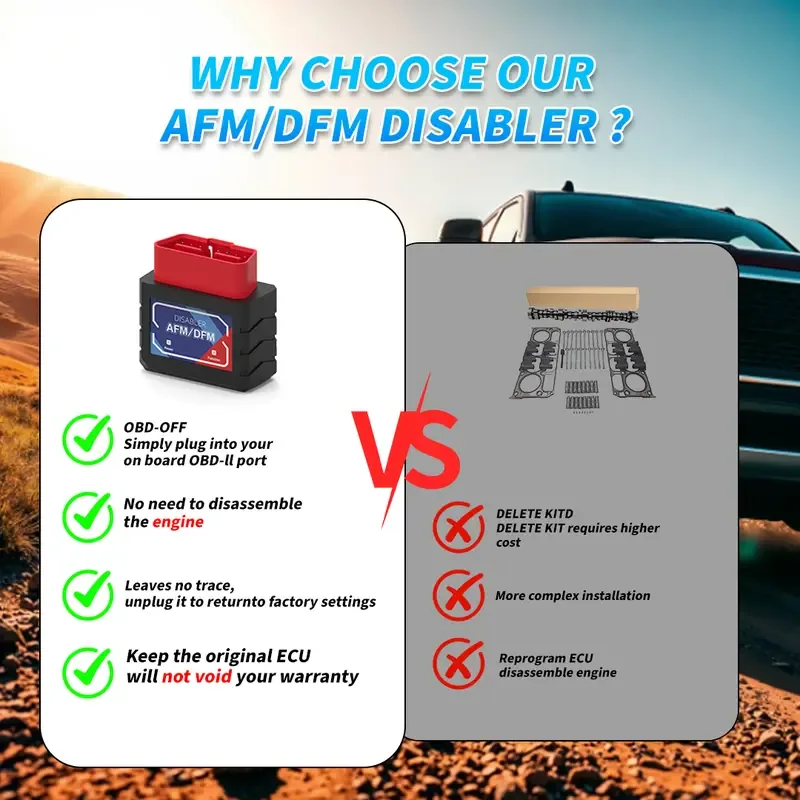
- A plug-in AFM/DFM disabler is a low-cost preventive step for healthy engines; an engine that is already ticking needs mechanical repair first.
If you sell parts to GM truck owners, you will hear the same question again and again: "How do I stop my truck from switching to V4 mode?" This guide explains GM's cylinder deactivation systems in plain English — what they do, which engines have them, why lifters fail, how to spot the warning signs, and what owners can do about it. It is written for both truck owners and the parts sellers who serve them.
What is Active Fuel Management (AFM)?
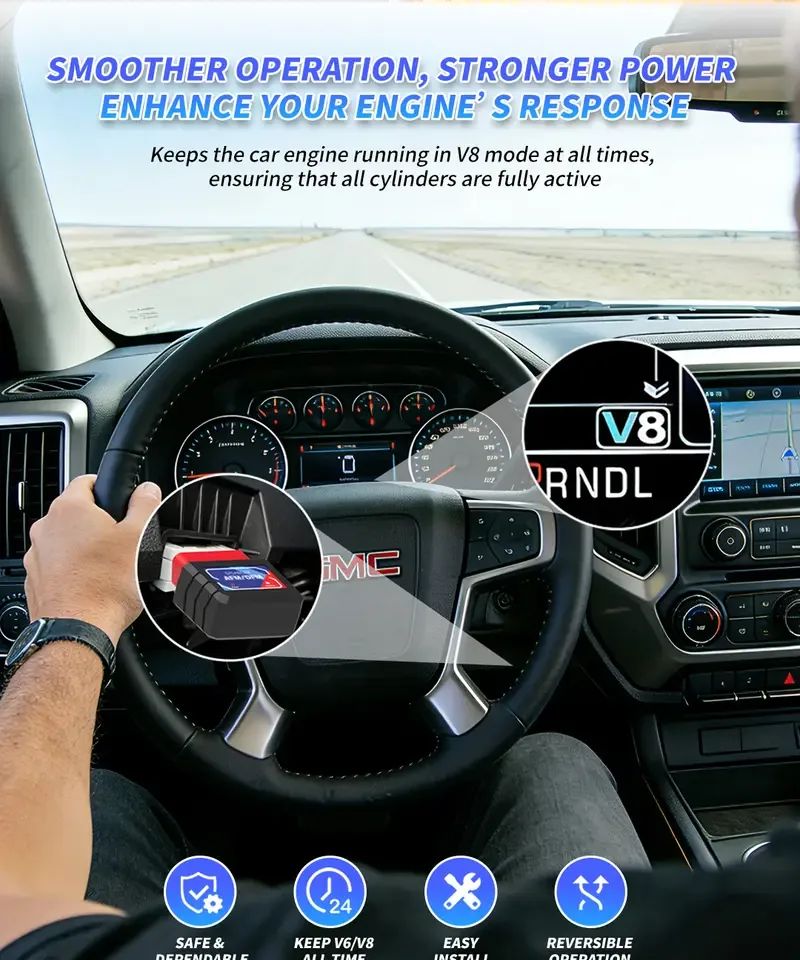
Active Fuel Management — originally called Displacement on Demand — arrived on GM V8 engines in the mid-2000s and later on some V6 engines. Under light load, such as cruising on a flat highway, the engine computer shuts down half of the cylinders. A V8 runs as a V4, a V6 runs as a V3, and fuel economy improves slightly. When the driver asks for more power, all cylinders come back on within a fraction of a second.
To make this possible, AFM engines use special collapsible (deactivating) lifters on the cylinders that can be switched off. Oil pressure, controlled by solenoids in a lifter oil manifold assembly (often called the "valley plate" or LOMA), tells those lifters when to collapse so the valves stay closed. Fuel injection to those cylinders stops at the same time.
What is Dynamic Fuel Management (DFM)?
From the 2019 model year, GM began moving its 5.3L and 6.2L truck engines to Dynamic Fuel Management. Instead of switching between just two modes, DFM can deactivate different combinations of cylinders depending on demand. The idea is the same — save fuel by running fewer cylinders — but the system switches far more often and every cylinder uses deactivating lifters, which means more parts that can wear.
Which GM engines have AFM or DFM?
AFM and DFM are found on a large share of GM V6 and V8 engines built since the mid-2000s. As a general guide:
| Era | System | Typical engines | Common vehicles |
|---|---|---|---|
| Mid-2000s – 2013 | AFM | Gen IV 5.3L and selected 6.0L / 6.2L V8s, some 3.9L V6 | Silverado, Sierra, Tahoe, Yukon, Suburban, Avalanche, Impala, Grand Prix |
| 2014 – 2018 | AFM | EcoTec3 4.3L V6, 5.3L V8, 6.2L V8 | Silverado / Sierra 1500, Tahoe, Yukon, Escalade |
| 2019 onward | DFM | EcoTec3 5.3L and 6.2L V8 with Dynamic Fuel Management | Silverado / Sierra 1500, Tahoe, Suburban, Yukon, Escalade |
Not every engine in these years has cylinder deactivation, so the safest way to confirm is the VIN or the engine code on the build sticker. See our AFM disabler compatibility list for the vehicles the disabler supports.
Why do AFM lifters fail?
Cylinder deactivation works well for many drivers, but it is also one of the most discussed topics on GM truck forums. The deactivating lifter is more complex than a standard hydraulic lifter: it contains an internal locking pin that must engage and release thousands of times. Factors often linked to failure include:
- Oil condition and level — the system depends on clean oil at the right pressure. Extended oil-change intervals, low oil level or the wrong viscosity make sticking more likely.
- Frequent mode switching — every switch is a mechanical event. Stop-and-go and light-throttle driving can mean constant switching.
- Long periods in deactivated mode — some owners and mechanics believe the idle lifters on deactivated cylinders suffer from reduced lubrication and wear differently.
- Mileage and age — like any moving part, lifters wear; a failing roller can then damage the camshaft lobe.
Symptoms of AFM / DFM problems
Owners and parts sellers should know the warning signs. Catching them early keeps the repair bill smaller.
| Symptom | What it can indicate |
|---|---|
| Ticking or tapping noise from the top of the engine | A collapsed or sticking lifter |
| Misfire codes P0300–P0308, rough idle | A valve not opening on one cylinder |
| Check-engine light, flashing under load | Active misfire — stop driving hard and have it checked |
| Rising oil consumption between changes | Oil being pulled into deactivated cylinders |
| Shudder, vibration or hesitation at light throttle | Rough transitions between V4 and V8 modes |
Important: a disabler is preventive. It stops the switching, but it does not repair a lifter that has already failed. If the engine is already ticking or throwing misfire codes, it needs a mechanical inspection first.
Three ways to stop cylinder deactivation
| Option | How it works | Cost & effort | Reversible? |
|---|---|---|---|
| Plug-in AFM/DFM disabler | Plugs into the OBD-II port and keeps the engine in full-cylinder mode | Low cost, 10-second install | Yes — unplug it |
| ECU tune | Re-flashes the engine computer to switch AFM off | Needs a tuner device or a shop | Only by re-flashing back |
| AFM / DFM delete kit | Replaces lifters, camshaft and valley plate, plus a tune | Major engine job, high parts and labor cost | No |
For most daily drivers who simply want the engine to stay in V8 mode, the plug-in disabler is the fastest and cheapest answer. That is exactly why it sells so well on TikTok Shop, Amazon and in auto-parts stores. For a detailed comparison, read AFM disabler vs AFM delete kit.
Maintenance tips for AFM / DFM engines
Whether or not the owner installs a disabler, good maintenance protects the lifters:
- Use the oil grade the manufacturer specifies and a quality oil that meets GM's specification.
- Do not stretch oil-change intervals — follow the oil-life monitor and change earlier if the truck tows or idles a lot.
- Check the oil level regularly, especially on engines known to consume oil.
- Investigate ticking early — a quick diagnosis is far cheaper than a camshaft replacement.
What to look for in a good disabler
- Zero battery drain — it should sleep when the engine is off so the customer can leave it plugged in.
- Auto Start/Stop memory — a nice bonus that saves pressing the button every trip.
- Wide fitment — covering both AFM and DFM vehicles reduces returns.
- Clear indicator lights — so the buyer can see it is working.
- Temperature range — it lives under the dash all year, from winter cold to summer heat.
Our 2026 AFM/DFM Disabler covers all of these points. Check the compatibility list or contact us for wholesale pricing.
Frequently asked questions
Can AFM lifter failure be prevented?
Nothing can guarantee it, but good oil maintenance and keeping the engine out of constant mode switching — for example with a plug-in AFM/DFM disabler — are the most common preventive steps owners take.
How do I know if my GM engine has AFM or DFM?
Check the VIN or the engine code on the vehicle's build sticker, or look for the 'V4 / V8 mode' indicator in the instrument cluster while cruising. Most 5.3L and 6.2L GM truck engines from the mid-2000s onward use AFM or DFM.
Will a disabler fix a ticking lifter?
No. A disabler stops cylinder deactivation, but a lifter that is already collapsed or damaged needs mechanical repair.
Does disabling AFM increase fuel consumption?
Running on all cylinders all the time typically uses slightly more fuel on the highway. Many owners accept this in exchange for smoother response and peace of mind.
Factory-direct pricing, samples and private label from 1,000 pcs.