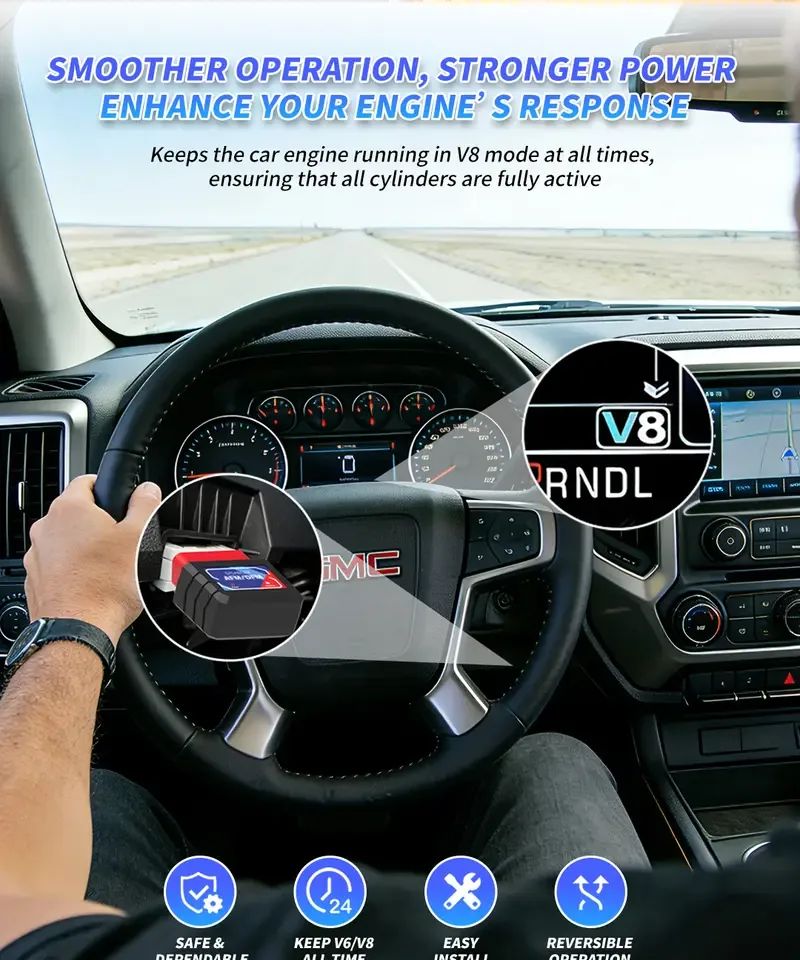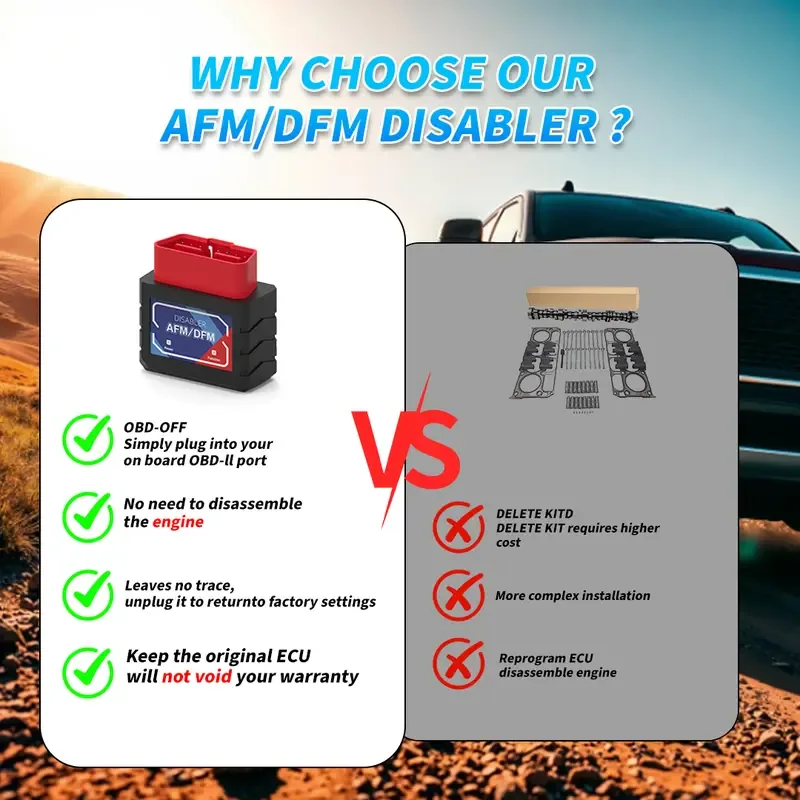
- A disabler is a plug-in electronic fix: seconds to install, no engine work, fully reversible.
- A delete kit replaces the lifters, camshaft and valley plate and needs an ECU tune — a permanent, major engine job.
- Healthy engine and daily driving → disabler. Engine already damaged or a performance build → delete kit.
- For retailers, the disabler is the easier product: one SKU, wide fitment, cheap shipping and low returns when fitment is checked.
GM truck owners who want to stop cylinder deactivation usually end up comparing two very different solutions: a small plug-in AFM/DFM disabler and a full AFM delete kit. If you sell to these customers, being able to explain the difference quickly helps you close more sales and reduce returns. This guide breaks down how each option works, what it costs in time and money, and how to recommend the right one.
What a delete kit involves
A delete kit physically removes the cylinder deactivation hardware. A typical kit includes non-AFM lifters, lifter trays, a new camshaft, a valley cover plate to replace the AFM oil manifold, and often new gaskets and bolts. The engine computer must also be re-tuned so it no longer tries to command AFM.
Installation means removing the intake manifold and cylinder heads — a multi-day job for a home mechanic or a significant labor bill at a shop. It makes sense when the engine already has a failed lifter or damaged cam and needs to be opened anyway.
What is usually in an AFM delete kit
| Part | Purpose |
|---|---|
| Non-AFM lifters | Replace all deactivating lifters with standard hydraulic lifters |
| Lifter guides / trays | Hold the new lifters in position |
| Camshaft | Replaces a worn or damaged cam; often a performance profile |
| Valley cover plate | Replaces the AFM lifter oil manifold assembly |
| Gaskets, bolts, pushrods | Needed when the heads and intake come off |
| ECU tune | Turns AFM off in software so no codes are set |
What a plug-in disabler does
A disabler plugs into the OBD-II port under the dashboard and keeps the engine in full-cylinder mode. There are no parts to replace, no tools, and no permanent change to the engine or ECU software. If the owner sells the truck or visits the dealer, they simply unplug it.
Modern units such as our 2026 AFM/DFM Disabler also sleep when the engine is off (no battery drain) and remember the Auto Start/Stop setting, so they can stay plugged in permanently.
Side-by-side comparison
| Plug-in disabler | Delete kit | |
|---|---|---|
| Installation | Seconds, no tools | Engine disassembly |
| ECU change | None | Tune / re-flash required |
| Cost to the end user | Low | High (parts + labor) |
| Reversible | Yes | No |
| Fixes an already-failed lifter | No | Yes (replaces it) |
| Downtime | None | Days in the shop |
| Best for | Healthy engines, preventive use, daily drivers | Engines already needing lifter / cam repair, performance builds |
How to recommend the right product
- Ask about symptoms. If the engine is ticking, misfiring or the check-engine light is on, recommend a mechanical inspection. A disabler will not repair damage.
- Healthy engine? The plug-in disabler is the obvious first step — affordable, instant and reversible.
- Building for performance? Customers already planning a cam swap will usually go with a delete kit and tune.
- Leased or under warranty? A reversible plug-in solution is usually the more comfortable choice than a permanent modification.
Things to consider before either option
- Fuel economy — running on all cylinders typically uses slightly more fuel on the highway.
- Warranty — permanent engine and software changes may affect powertrain warranty coverage; a removable device leaves the vehicle unchanged once unplugged.
- Local regulations — rules on modifying emission-related systems differ by country and state. Sellers and buyers should check what applies in their market.
Why disablers are the better retail product
For sellers, the disabler is small, light, cheap to ship and easy to demonstrate in a 15-second video. It fits a wide range of vehicles with a single SKU, and returns are low when fitment is checked first. That makes it ideal for TikTok Shop, Amazon, eBay and auto-parts counters.
Tips to sell more and reduce returns
- Put the compatibility list on the listing and ask buyers to confirm year, model and engine size.
- Show the install in video — the 10-second plug-in and the V8 indicator on the dash are the most convincing content.
- Explain what it does not do: it prevents switching but does not repair a damaged lifter. Clear expectations prevent negative reviews.
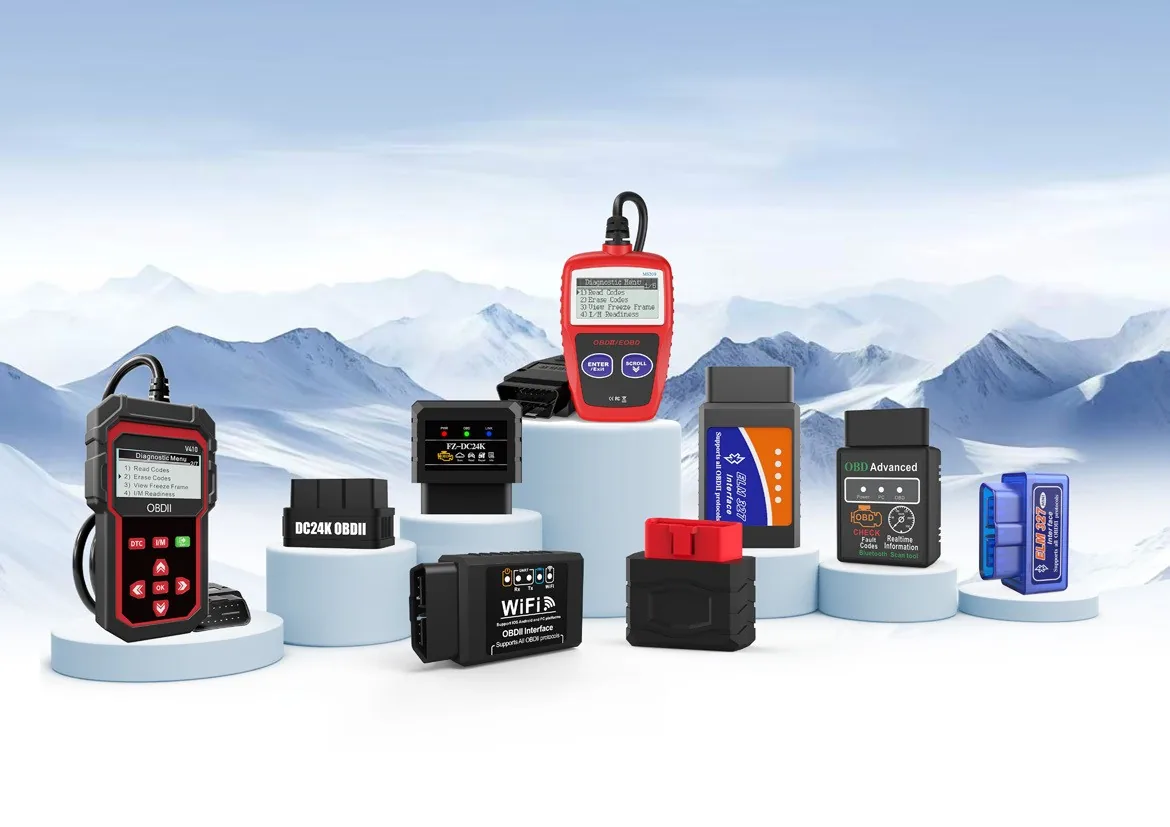
- Bundle with an OBD2 scanner so customers can also read and clear codes — see our OBD2 scanner range.
Explore our 2026 AFM/DFM Disabler — available in neutral packaging or under your own brand from 1,000 pcs.
Frequently asked questions
Is an AFM disabler as good as a delete kit?
For a healthy engine where the goal is simply to stop cylinder deactivation, a disabler achieves that without engine work. A delete kit is the right choice only when lifters or the camshaft must be replaced anyway.
Can I use a disabler after installing a delete kit?
It is not needed. After a delete kit and tune, AFM is already removed from both the hardware and the software.
Does a plug-in disabler need to stay plugged in?
Yes. It works while connected to the OBD-II port. Unplug it and the vehicle returns to factory AFM / DFM behavior.
Will the disabler interfere with an OBD2 scanner?
To use a scanner, unplug the disabler temporarily, read or clear codes, then plug the disabler back in.
Factory-direct pricing, samples and private label from 1,000 pcs.